

A Father And Son Blog
Today’s blog is a little different.
I sat down with my dad, Gene Edwards, who served in the police for 47 years. We talked about why he joined the force in 1972, the things nobody prepared him for, and the emotional weight that can stay with someone long after the uniform comes off.
This isn’t a sensational story. It’s an honest conversation between a father and son about death, violence, trauma, stress, and mental health – and about a generation of police officers who were often told to “just get on with it”.
Some parts of this episode are difficult to hear, including discussions of fatal accidents and child sexual abuse, but they are shared with care and with the hope that they help others feel less alone.
What does Mental Health mean to you?
Mental health I think is a word that’s come out a long time after I was in the Police, because it wasn’t a word that we used really. I suppose it was stress at that time, and I would think that stress is probably part of mental health.
“The ability to be able to cope with a normal life.”
It’s a very hard word to describe and the more I’ve thought about it, I can’t really give you an answer, other than what I’ve already said. It’s the ability to cope with a normal life, but what is normal?
Normal has lots of different meanings, again, another word I can’t describe, because a normal life back in the 70s is completely different to now – we live a completely different life.
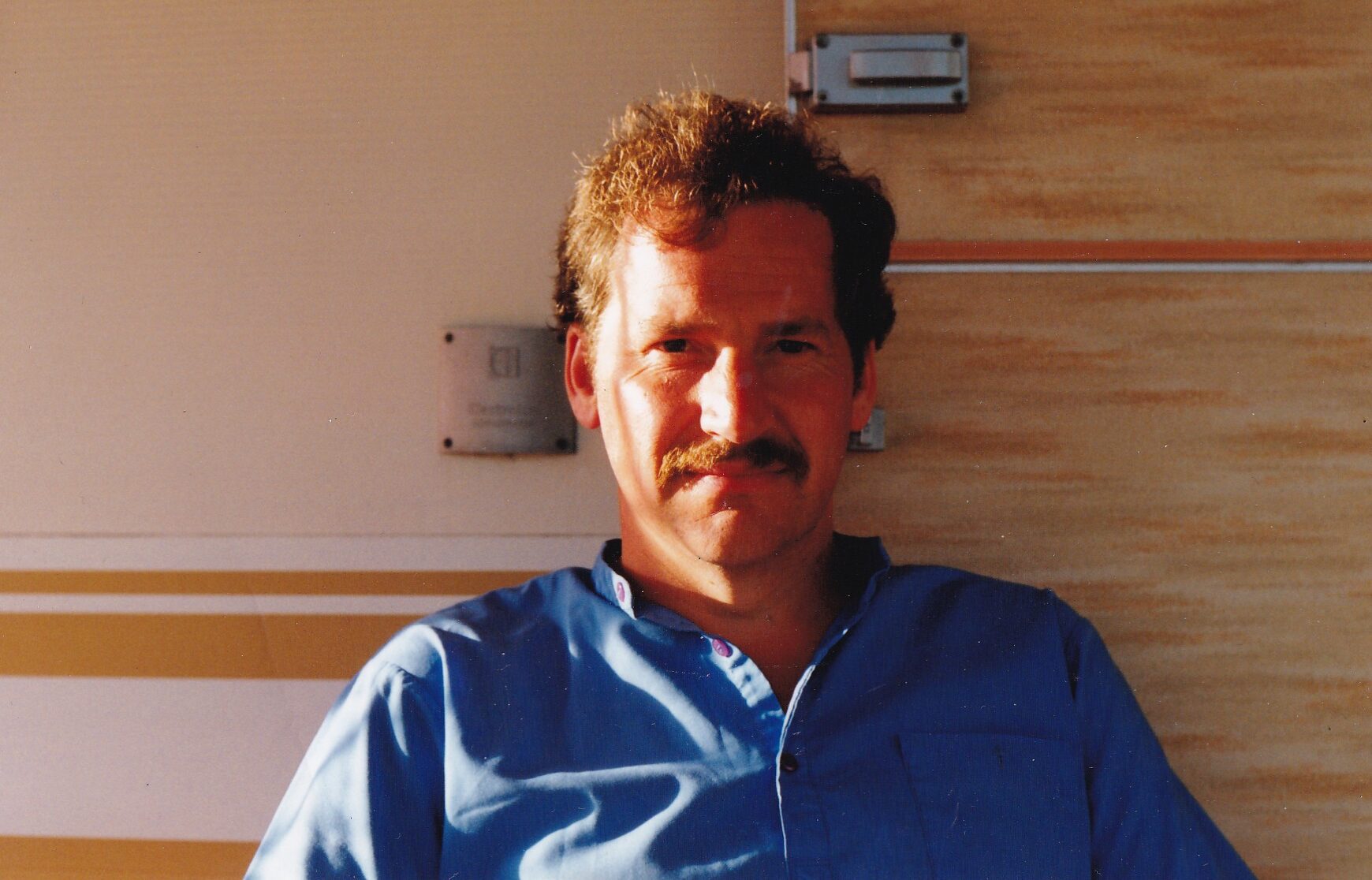
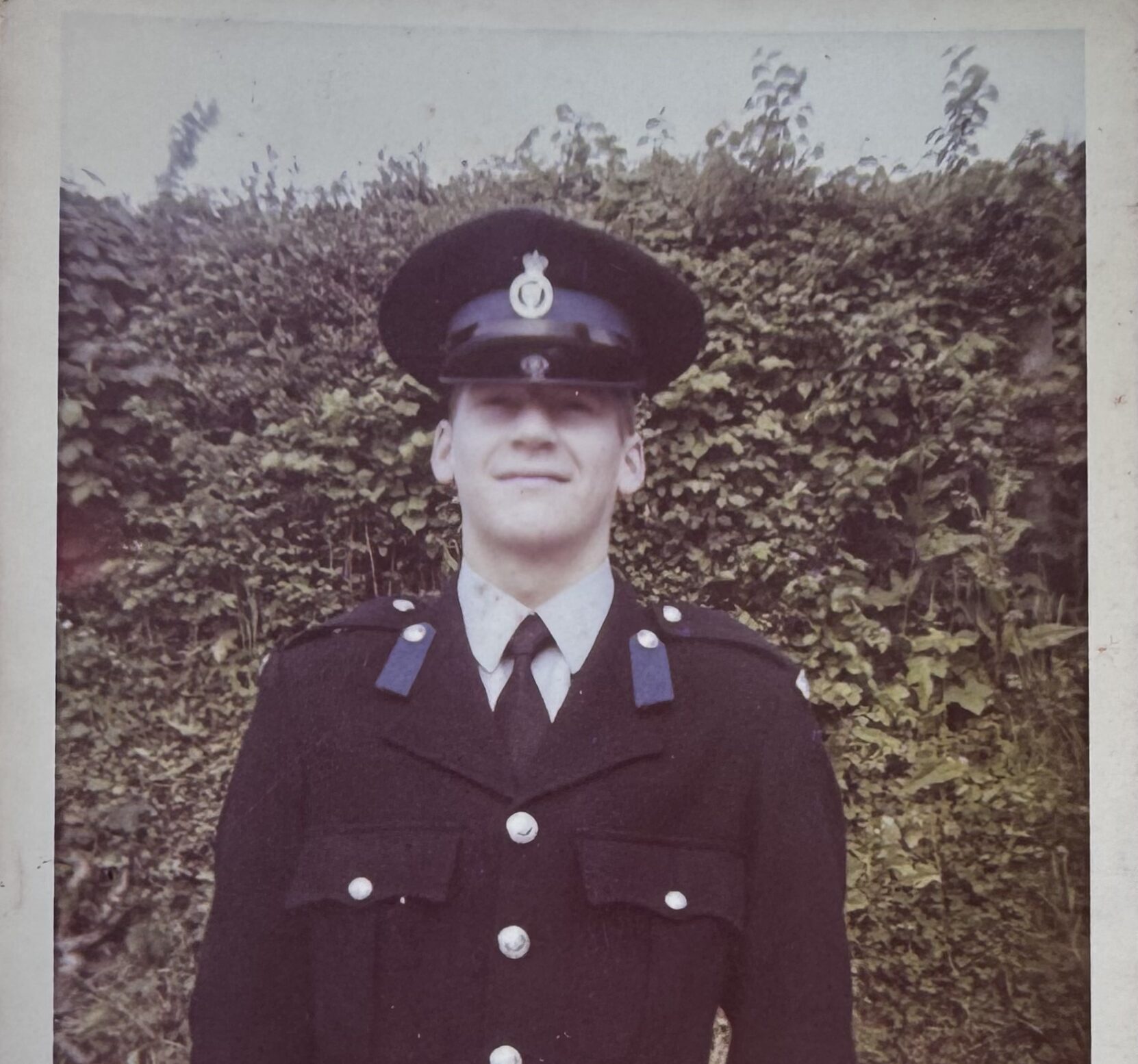
Gene aged 30
How has your life been affected by Mental Health?
I find Mental Health hard to define, but as young person, I think my start in the Police Service was very difficult due to having probably a very sheltered life, coming from a small town like Welshpool. I was bullied horrendously in Secondary School and in Technical College, when I was studying plumbing and heating. We’ve all heard the song by Johnny Cash, ‘A Boy Named Sue”, well I was a boy named Gene.
“A Boy Named Gene.“
Going back to the late 60s and the 70s, if you had a name like ‘Gene’, which was a girls name, you were different from the rest. It’s very easy for people to make fun of you and stuff like that I can recollect caused problems in my life, until I joined the Police Service.
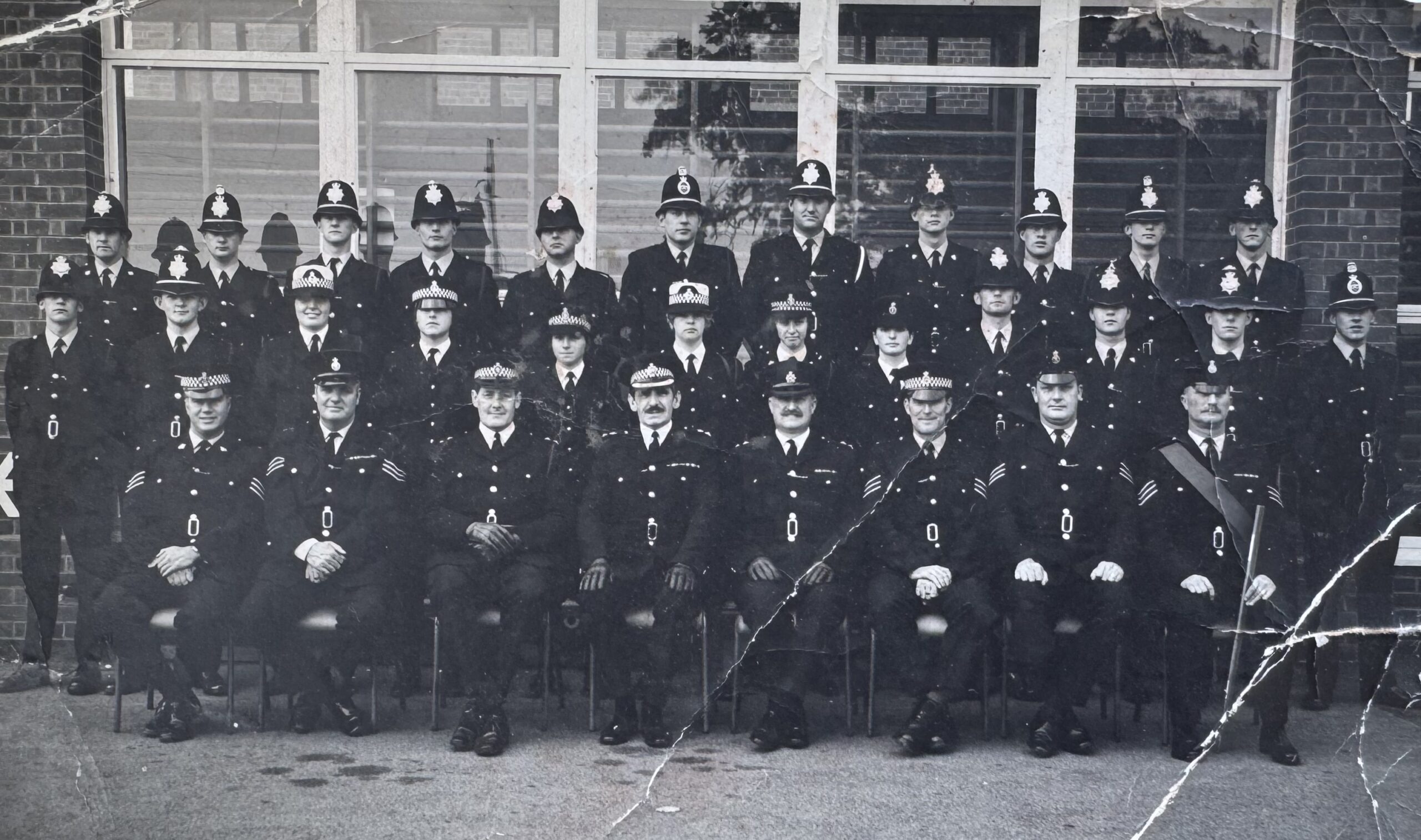
TBC
Thankfully all that stopped (the bullying) because I came part of what I would call ‘a big family‘. I was working with self-minded people, some coped better than me at the start, but I think it definitely changed my life in the early stages. Bullying really affects people as I found out – it possibly made me scared of confrontation, so people would say:
“Why did you join the Police Service?”
I can’t answer that. You look for the smallest hole to hide in to get away from it, but it’s part of life – that will never stop.
“What made you want to sign up to the Police Force then?”
Right, were going back to 1968 now, which is when I left school, the age of 15. I went to work with my Dad, as a plumbing and heating engineer and went to a technical college to study, and worked like that for 2 or 3 years. It got to stage where I thought, as a lot of people do:
“Am I in the right job?”
I spoke with my Dad, and we discussed going on our own (our own business), in a similar sort of job, servicing boilers and plumbing. Unfortunately he became ill, and we realised we that we were not going to be able to be a father and son business, it was actually going to be a son and father business – just as a joke really on the side of a van; Gene Edwards and father.
That didn’t happen, so, I was unhappy in my job, getting home at night filthy dirty with soot, perhaps working with my Dad all day didn’t work well. I decided that I would join the Royal Air Force following my Dad’s footsteps, or the police.
I sent off applications to both parties, and sure enough, the police, who were desperate for police officers at that time, 1971 – 1972, returned my request, and before I knew it, I’d taken an entrance exam and passed to go in the police.
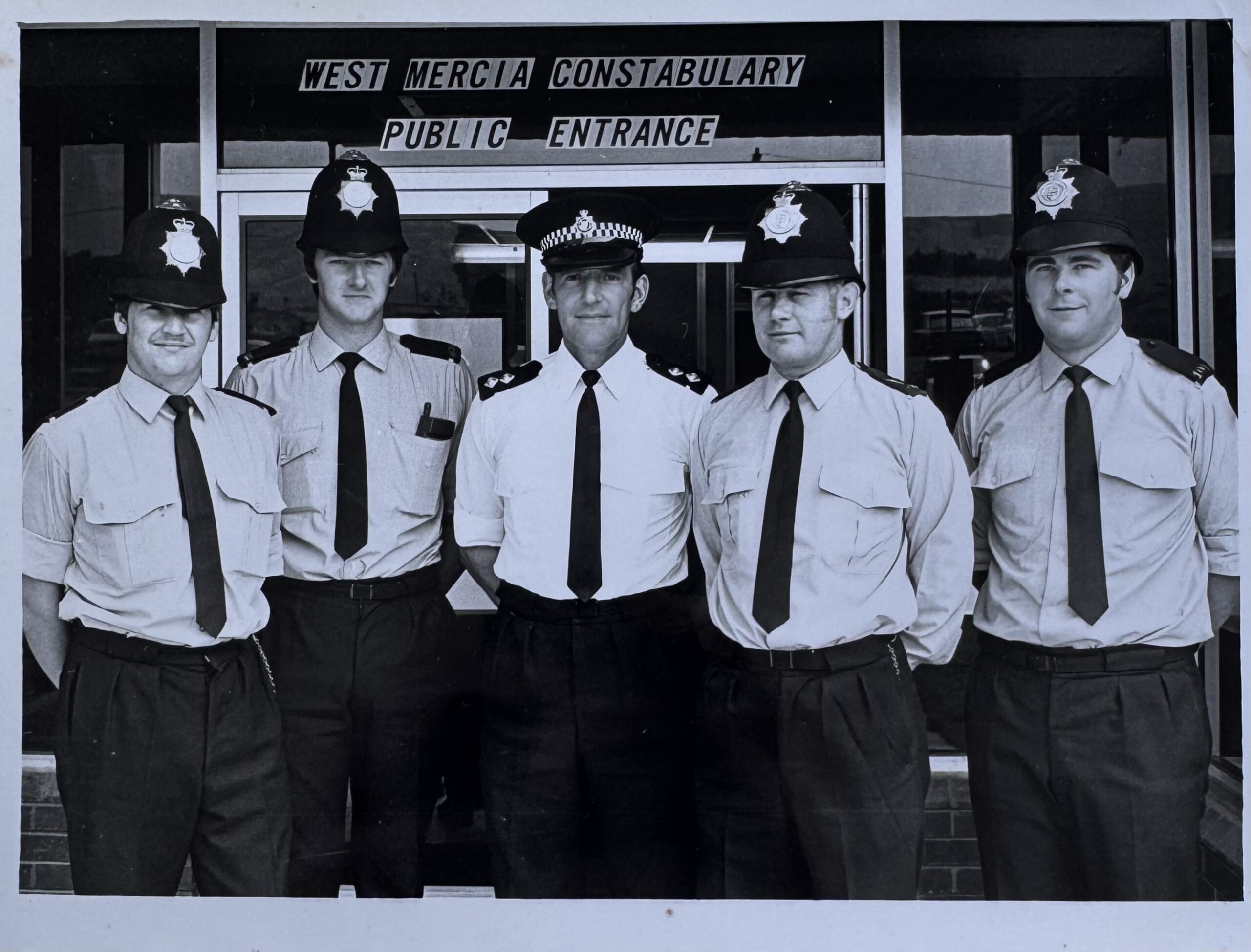
TBC
So I joined the police as a cadet, way back in January 1972 – It was a short course – I went in as a cadet and joined as a police officer on my birthday in July 1972. It was a quick decision I suppose, to join the police, there wasn’t anything else I was qualified for, I wasn’t ‘educationally’ good in school. My decision really was truly based on the police coming back to me before the RAF.
“I don’t think we called it Mental Health, we probably called it stress.”
“I’ve previously spoken to other police officers, and some do and some don’t, do you remember your first day, and what happened?”
I remember standing on a parade square when the Chief Constable of West Mercia, which was Shropshire, Herefordshire and Worcestershire, where I joined, and we we’re all stood on a parade square at some stage, very early in my service, and the Chief walked up to me and said:
“Where would you liked to be stationed, laddie? You’ve got a choice, of Telford (It was Dawley back then) or Shrewsbury.”
I said “I’d like to go to Shrewsbury, sir.
He said “Well you’re going to Dawley.”
I’d never heard of Dawley, this now comes under the remit of Telford, Malinsgate & Wellington which are all amalgamated.
At that time going back to the 70s I was posted to Dawley, which was actually a sleepy little house (the station), next door to a pub, which became handy for us.
I can’t remember my first day, all I can remember is going to Dawley Police Station feeling a very nervous young individual. Looking back now, fairly naive, going into a job which I found in the coming months and years to be exciting, but very challenging.
“Do you think you joined the police too young? Does age have any bearing on how you cope or is it dependant on the person?”
I suppose it depends on the person, but I feel looking back that I was too young to join. I would have been better off doing something else in my life and join perhaps at 21.
“What did the job involve that nobody prepared you for?”
I think probably being able to deal with death, violence, and knowing how it’s going to affect you life, because all the things that I was involved in.
They were probably minimal compared to people in the big cities, but dealing with death and violence has a long-term effect on anybody, particularly when you’re dealing with the death of a young person, attending post-mortems, fatal road crashes and getting assaulted.
There’s a number of things that I could talk about that I feel affected me, and how I was able to cope. I think you have to become very ‘blinkered’ once you’re in the job, otherwise you take your work home with you and for some people they can’t do that.
“What was the first death you attended – what was it like?”
I can’t say it was the first death I went to, but I recall going to an accident on a ring-road on quite a new housing estate – It would be round about 1979. I was on traffic at that time, I was with my partner, Don, and we got called to this accident.
When we arrived, we’d seen that a young nurse had been walking across the road, and she’d been hit by a lorry. She was sat on the side of the road, clutching her handbag. I sat next to her on the pavement, and just got a few details off her.
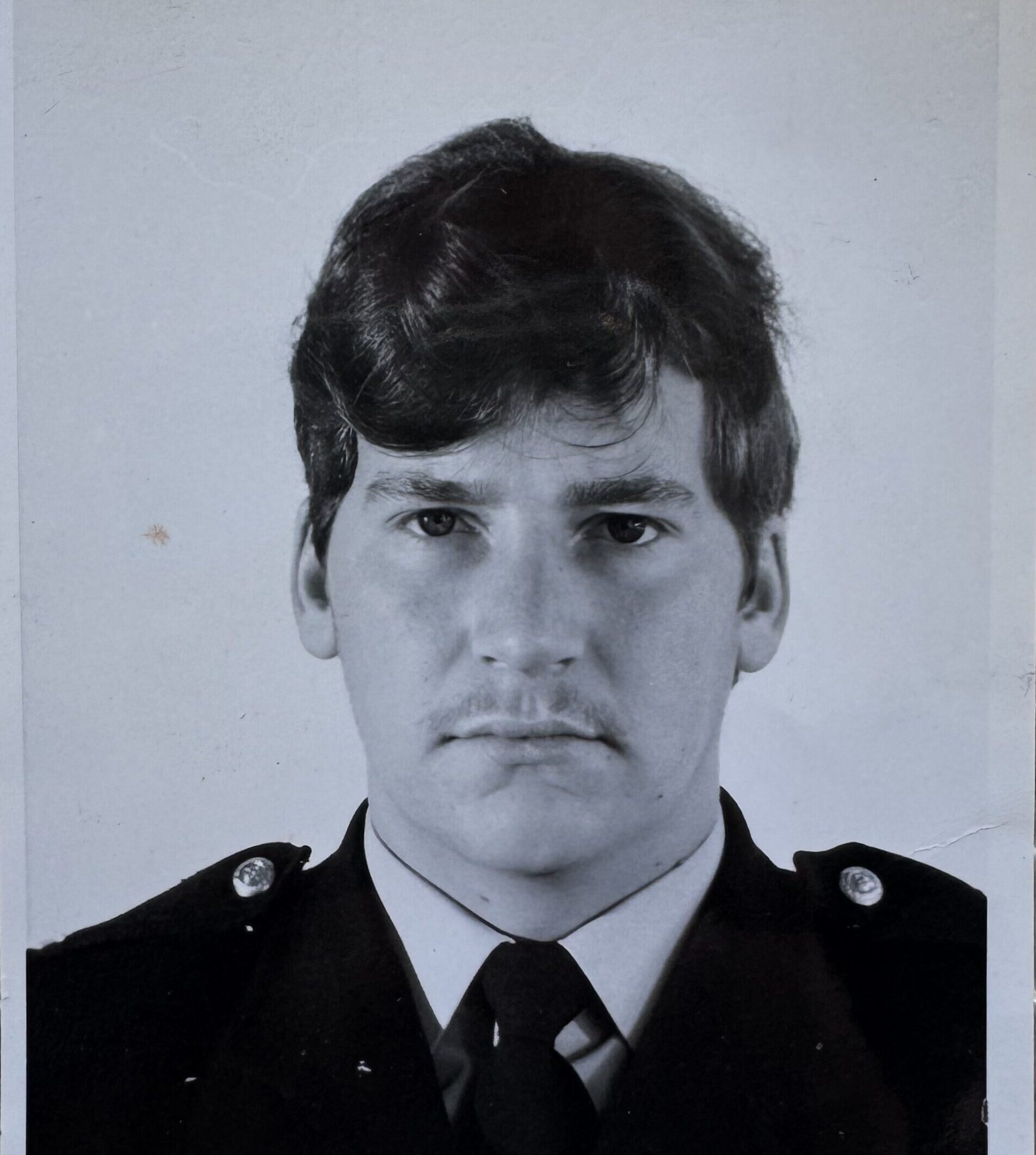
TBC
A short time later, an ambulance arrived, and I helped her into the back and sat with her to get sufficient details as to what had happened in the accident; I can’t recall what she actually told me – The ambulance then took her to the hospital.
She must have been about 23-24 years old, a slim-built young girl.
We finished our shift, and got back to the station, and the Sargeant come up to us and said:
“Have you been dealing with a fatal accident?”
I said: “No, we dealt with an accident on the ring-road.”
He said: “What did that involve?”
I said: “It was a lorry which knocked over a young nurse.”
He said: “Well she died in hospital as soon as she got there.”
That hit me like a brick, I was so upset, because she was perfectly alright at the time, she’d had internal bleeding, which I didn’t know anything about. Something like that, lasts in your memory for a long time. Could I had done anything different? I certainly couldn’t have helped her – what a waste of a life.
“It’s something I will never forget.”
“Your memory is very clear from all those years ago, how do these memories affect you mentally?”
The more you think about the things we had to deal with in the police, they affect you, but I think you become, as I said before, ‘blinkered’. You deal with death, sexual abuse, violence, and it sometimes became an everyday occurrence; you just have to shut your mind off otherwise on occasion you take it home with you, and you dwell at night and you don’t get to sleep.
TBC
It has an effect, but going back to the 70s and 80s, I don’t think we called it mental health, we probably called it stress, and I certainly had stress-related problems.
It’s difficult to talk about, because it goes back such a long way, and there are so many different instances that have caused me problems in the past. Some I can’t remember, some which are still vivid in my mind.
What was the first case of sexual abuse you dealt with? How did it affect you?
I think the worst case of sexual abuse I dealt with, was a male paedophile who preyed on young boys. Many years ago, I was aware that a young boy stayed in the home of this paedophile, and we removed the young boy from this man’s house and found that he’d actually taken him fishing, and spent time over night with him in a sleeping bag.
I then became involved in this young boys family, I took the boy to video 3 times, and he wouldn’t talk to me – he would swear at me, and run out of the room during the video. Just before I retired, this man (the paedophile) had been arrested for another offence, and I went round to see the young boy and told him that I was retiring, and now was his chance if he ever wanted to make a complaint to me about the way he had been dealt with by this paedophile.
TBC
It was at this time, this boy had reached the age of 18, and we eventually managed to get a statement off him – he alleged he had been raped.
The case ended up in the Crown Court and the initial trial, we had a hung jury, so that was six guilty and six not-guilty, so we had to have a retrial. This boy had to go through all the problems in the court case again. Initially, he refused, but I explained to him that after a number of years, we couldn’t let it go, we had to do it, we had to go through it again.
I retired before the end of the case , and I had a telephone call from a police woman sergeant, to say he’d been found guilty – and I just burst into tears – it had taken me about 9-10 years to get this man convicted for this offence of rape, and he eventually got 13 years. I think that’s been the hardest case I ever dealt with, even now, it brings me to tears.
“It’s clearly an emotional time for you, re-visiting this old case. If any, what contact did you have with the victim before he told you about any abuse?”
From the day we removed him from this man’s house, I was getting constant telephone calls from his mum and his dad; they wanted to see me at the house all the time, so I spent a lot of time there, over the next three, four and five years, where this young boy had assaulted his sister, his dad and he had smashed the house up – he couldn’t cope with life.
I took him to the video suite on at least three occasions, to try and do a video with him, and couldn’t tell me what had happened to him – he was too embarrassed. It’s not the type of thing young boys talk about.
The calls to the station for me, continued even when I was off-duty – I spent a considerable amount of my time up at the house trying to sort the matters out for them. The calls continued for a number of years, and this boy was behaving more violent, and he actually got himself in trouble for other offences, unrelated to sexual abuse – which we had to deal with as well.
It wasn’t until he finally made a statement to me, that I found out what had happened to him. This statement must have taken me over three days to fully write down, as he was too old do to a video at that time. There was something in his mind he didn’t want to tell me, but he finally broke down towards the first or the second half of the statement, where he said:
“He fucking raped me, he fucking raped me. Is that what you want me to say?”
All I said to him was: “All I need is the truth. What happened to you.”
Once he said that to me, he seemed to calm down a bit, and he then discussed exactly what had happened to him. I think it was such a big shock to him, to have to tell someone after all those years that he had been sexually abused, very very badly by a paedophile.
He wouldn’t have known this man was paedophile at the time, which I knew, but couldn’t tell him that.
“Why do you think he waited until that moment to tell you?”
I got to a stage where I thought he wasn’t going to tell me at all. I think the build-up that he knew that I was finishing in the police, and if he had to tell anybody, he had to tell me. I can only assume that, I’ve got no evidence to suggest that, that’s what I can assume from that.
He’d not spoken to anybody else exactly about what had happened – He’d never told his family – To the best of my knowledge he’s never mentioned it to anybody, until he told me.
“After the court case, did you ever see this young boy again?”
Strangely enough, I did – I was working on a street in town one day, and I was doing some investigations into some offence, I certainly can’t remember what it was now. All I can remember is that it was a really hot sunny day, when I saw about five or six bare chested men walking towards me, along the footpath.
They were quite rowdy, and I heard the name “copper”, so I thought, “What’s going to happen here?”.
I stood on the pavement and just watched them coming towards me, I can remember some of them had food in their hands so they were out for their dinner.
All of a sudden, one of the lads broke off from the crowd and started walking towards me, as soon as I saw this person, I realised it was the young lad I dealt with. He just give me an outstretched hand and said:
“Thanks very much for what you did for me.”
Even now it upsets me. What a nice thing to say. What a nice way to finish in the police.
What advice would you give someone who is joining the Police Service in today’s world?
I don’t think I would give advice to anybody who is considering joining the Police, because it’s changed so much since I’ve come out of it. With the of rise social media and the advent of mobile phones, I think it’s made a great difference to policing in the 2000s than the 1970s.
You can’t say anything now without getting in trouble – it’s not that you can’t do anything wrong, because you weren’t supposed to do anything wrong back in the 80s, but you have to be so careful how you speak to and treat people, because there’s always somebody on the end of a mobile phone taking pictures of you.
In terms of advising somebody, I don’t think I would give advice, because I don’t know how the Police Service is run. It’s a lot different to when I was there.
“What did I see as a child that I probably didn’t understand at the time?”
Working as a Policeman, you spend so much time at work, and children suffer themselves because they never see their Dad. I came into contact with lots of children, some who haven’t got parents, and the difficulty in not seeing a parent has a great effect on their life. I couldn’t change that because I was working ’round the clock’, so to speak.
This is a question you’ll have to ask yourself. You were very young when I was in the Police, and you have to ask yourself:
“Did you notice I was missing all the time?”
It’s difficult for me to answer that in relation to you, I was aware that I was away from home a lot, working long hours, and sometimes working through the night – My time with you to a certain extent, was minimal.
That’s got to have an effect.
What did Police Officers do in the 70s and 80s when there were struggling?
It’s fair to say that I struggled on main occasions in the Police Service – this was sometimes due to the amount of work we had to do – sometimes the hours we had to work, and sometimes the kind of work we had to do; dealing with death, attending post-mortems (which I found very difficult), violence, attending public order incidents, violence at football matches – this all has an effect on you.
I remember many years ago, when I joined the Police Service, an Uncle of mine said to me:
“One thing you will learn when you join, is how to drink.”
He was right.
The saviour for me on occasions, when I struggled, was to drink, and it’s fair to say on many occasions I drank too much – I’m sure a lot of Police Officers would say the same thing.
I’m sure there was help out there, if we asked for it, but that’s the last thing that anybody would ask for if they’re struggling, because you don’t want anybody else to know.
If you did reach out to friends, family or a counsellor, how would it look to fellow Police Officers?
Because of the difference between the 70s and the 2000s, if we go back to when I was in the job, it would be a sign of weakness, or you would feel it was a sign of weakness. Now, people who ask for help, do get more help, and they are better looked after, because of their mental health.
Mental health when we had problems was not recognised. I am certain we could have got counselling, if we wanted it, but I don’t think I would have ever admitted to anybody in the Police Service that I needed help.
This did come to a head on one occasion when I was struggling with stress – I had a few family problems, so I decided to go and see my Doctor. I told him my problems, and his first question was:
“Why don’t you change your job?“
I’ve been in the Police Service too long to change my job now, I don’t know anything else. I said to him “What else can you offer me?” He wanted me to go and see a Doctor at Shelton Hospital, back in the 70s and 80s this was a ‘mental institution’ in Shrewsbury, for people people with mental health problems – so it did exist. He wanted me to chat with this Doctor and he made an appointment for me. This was next Monday, so 5 or 6 days away.
At that time, I was on the drugs liaison in Oswestry, and I had two colleagues, one in Shrewsbury and one in Telford, who did the same thing as me, in relation to drugs – we used to meet up quite regularly for a drink.
“… a Doctor who was stuck up a tree and wouldn’t come down.”
Later that day (after seeing the Doctor), we met up in a local public house, and my two mates were laughing when they came in, I said “What’s the matter with you two?” they said “We’ve just been to Shelton Hospital and we’ve had to rescue a Doctor who was stuck up a tree and wouldn’t come down.”
“What Doctor was that?”, I said. They gave me this Doctor’s name and it was the man I was supposed to be going to see in relation to my mental health problems – I had a big laugh about it, obviously I didn’t tell the other lads, but I never did go to see that Doctor. I’d obviously got problems in the first place to go and see the original Doctor.
I think it was what I needed, perhaps you’d say it was a bit of a kick up the bum for me to realise that I could cope with life.
Do you think talking about these memories today has helped you in any way?
I think talking about your problems does benefit you, at my age now at 73 I don’t think it’s going to d anything really good for me, but even talking to you about my problems I suppose gets it off my chest.
For other people who are able to talk about their problems, I think it can be very beneficial for them, even telling somebody else about your problems is a benefit.
What would it mean to you if another retired Police Officer read this and realised they weren’t alone?
If somebody had told me at the time they’d got problems, such as being stressed out, or had ‘mental health’ problems, it would have been difficult to know what to do with that, who’d to go to – things are far easier now, reporting matters, especially if you’ve got the ‘bottle’ to talk about it, which is difficult.
I would hope that hearing my story and realising that I had suffered from stress problems or mental health problems within my service, would help them to talk about their problems.
“It’s hard to know really, because every person is different and every type of problem is different.”
After 47 years, who were you when you took the uniform off for the last time?
It’s difficult, because I was a Policeman for 30 years, I then went back as a civilian, so I finished off in child protection, as a Detective Constable, which involved me video interviewing vulnerable adults and children for offences against them of a sexual nature, physical nature of domestic abuse.
When I retired after 30 years, I then cam back into the Police Service as a civilian dealing with the same subject, and for the last 2 years of my service, I moved onto domestic abuse – dealing with a similar thing, only it was mainly involving vulnerable women in domestic abuse relationships.
I didn’t really come out of the job until I had done 47 years. It’s very difficult, I think, because I certainly missed the job when I finished.
As I said earlier, being a Police Officer is like being part of a family. You deal with so many difficult jobs, but you’ve always got people there to help you, just as you’re there to help them with their problems.
That goes beyond the problems you face while serving in the Police. You’re helping people as individuals too, supporting them with things outside of the job and almost becoming a mentor to other people along the way.
And now that’s all gone, when you leave the Police Service you’re then nobody – you’re not a Police Officer, you’v got no authority and I found it very sad. I certainly missed it.
Do Police Officers ever truly stop being Police Officers?
Being Part of the Police, you become known to a number of people who are sometimes ‘anti-Police’ and it’s good to become aware of your surroundings.
Whenever we used to walk into a pub, I mean some pubs you wouldn’t walk into, because you know what type of clientele they’ve got, but the pubs that I used to drink in, when you walked in, you would immediately look around the room and see who was in there.
This was very similar the Police in Ireland who used to stand with their backs to the wall for safety reasons, and a similar fact really for me. I would just look in the pub, see if there’s anybody there who I thought might cause me problems, and if I thought that I’d just walk out, whether other Police Officers would do the same thing – I don’t know.
At the end of the day, you’ve got to keep yourself safe, and as a Police Officer sometimes you become a target – I was involved in many fights and assaults and ended up on occasion with three broken ribs and I’ve had different parts of my body damaged as well – which I can’t really talk about!
Tell me something from the Police which made you laugh…
It wasn’t all doom and gloom in the Police.
I remember very early on in my service, I was with my parent Constable, Alan, and we were in Dawley Police Station and it was snowing heavily. We’d had a notification of an alarm in a place called Jackfield. In those days, we were driving little Mini Clubmans.
We rushed out to the Panda in the back yard, I pulled the front door shut in the station, and we travelled through the snow to Jackfield to find out it was a false alarm. As we travelled back through the high street in Dawley, this was about 230am, the streets were completely empty apart from one person, who was walking along the street towards us dressed in a very dark coat. Alan said to me “We’ll check him out.”
TBC
So we pulled the car over and I went across to this man and I noticed that he was wearing a long black ‘Gabardine Mac’. On his shoulders he’d got epaulettes with the numbers ‘640’. I never mentioned this, but my collar number in the Police was 640. I realised at this time that he was wearing my coat, which had been in the parade room at Dawley station.
This man had gone into the station, found nobody there, and had a walk around and taken my coat off the hook because he was cold.
I was advised by Alan that I should arrest him, for theft of my coat, or I should let him go home, because I’d obviously left the station insecure.
“I’ll leave you guessing as to what decision I made!”