Almost 9 Billion People
Every single person on Earth (currently 8,269,696,183 as of 19th January 2026 AD), who has access to this blog, and subsequently reads it, will have a different version of what mental health is.
We’re all unique, but at the same time, so fundamentally similar; we all breathe, we all communicate, we all talk, we all function; and we all co-exist; however, the only thing which separates us, is our brilliant minds.
Maybe it’s too broad a question to answer, and you might think that your personal definition will differ from everyone else’s – and of course it will. We all interpret it in our own way, because our minds and DNA are unique.
What is certain, though, is that these are two small words with gigantic consequences. They’ve shaped the modern world of health for decades, and as the conversation grows, so too does the problem – along with the enormous stigma that still seems to be spiralling alongside it.
If we transcend back to the 70’s, 80′ and 90’s, mental health was rarely discussed. If people had ‘mental’ problems, from personal accounts we’ve heard, you were expected to just ‘man-up’ and get on with it – Alongside other ‘coping’ methods, which these days would seem ludicrous to even consider contemplating.
How Perception Has Changed
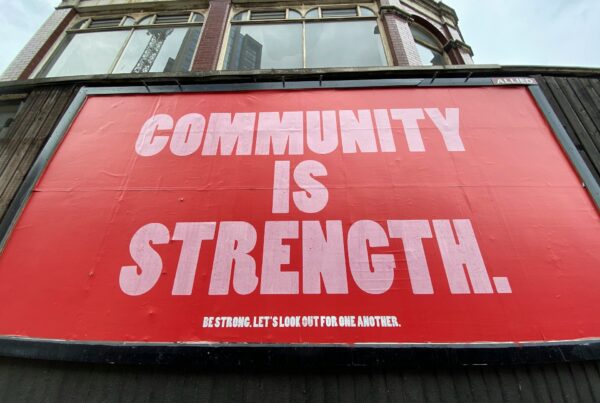
There has certainly been a monumental shift in the world’s view of mental health over the past few years. Maybe it’s because all nine billion of us have, inadvertently, come together in solidarity and simply started talking about it.
Today, stories spread like wildfire across social media. But in those earlier years, those platforms didn’t exist. Back then, it was word of mouth – and that’s powerful. It only takes one person to speak to the next, and then the next, until it becomes the talking point of a village, a town, a city, a county… and eventually, a country.
Essentially, in a nutshell, it’s about being human – the way we react, handle, and deal with every single situation life throws at us.
Mental health takes us on an emotional journey: from the highest, happiest points of our lives – right at the crest of a rollercoaster, where everything pauses in silence and we bask in the euphoric moments of achievement – all the way down to the bottom, where it can feel like we’re walking through thick and filthy sludge.
However, if we’re going to try to understand mental health properly, it’s important that we understand the extremes – whether that’s the crest of the rollercoaster or the very bottom. It’s often the extremes, particularly the lowest points in our lives, that carry the most peril and, at times, lead to consequences that can be devastating and irreversible.
Polar Opposites
To better understand mental health, weather feels like the most fitting metaphor. If it were a specific condition, it would be fog – without question, 100%.
The fog we experience doesn’t give us a clear enough picture to function at our best. It blurs our surroundings, dulls our reactions, and makes it harder to see – both physically and mentally – what’s right in front of us.
Imagine driving down the road at 70 mph (and no more!), when a sudden wall of fog rolls in. In an instant, your vision is distorted. You’re left with only a few metres of visibility, unable to see the cars ahead or alongside you. Without being too obvious… that’s the kind of moment where one’s underpants would turn brown fairly promptly!
The contrast between different types of weather can be extreme. On one end of the scale, you’ve got 45-degree, scorching sunlight beating down on the ground; on the other, minus 50, buried under four metres of the white fluffy stuff.
Living in the UK, we don’t really experience these true polar opposites – excuse the pun – but I do see a clear parallel with mental health and the way it affects each of us differently.
Mental health is our internal weather. We experience the highs – like a sunny day, out and about and feeling great – and the lows: rainy, doom-and-gloom days where everything feels a bit rubbish, or sadly, even worse.
There’s also the middle ground. For those of you thinking, “Surely it’s not that black and white?” – that’s the overcast day. A little sun, no rain, and just… feeling okay.